

The Ultimate Cutlery Set Guide: Are You Using the Right Plastic?
We use them at parties, in the office cafeteria, and for takeout at home. But when was the last time you actually looked at your fork?
Most of us grab a disposable fork, use it for ten minutes, and throw it away without a second thought. But beneath the simple surface of a cutlery set lies a complex world of science, design, and environmental impact.
1. PP (Polypropylene) – The Heavy Lifter
The Vibe: Tough, flexible, and heat resistant.
The Test: Try to bend a PP spoon. It springs back. It can handle hot soup without wilting.
Best for: Catering, hot foods, airplanes.
2. PS (Polystyrene) – The Crystal Classic
The Vibe: Rigid, clear, and brittle.
The Test: Snap a PS fork. It breaks with a sharp “crack.” It is cheaper than PP but feels more like glass.
Best for: Cold desserts, salad bars, budget takeout.
3. PLA (Polylactic Acid) – The Green Guardian
The Vibe: Plant-based (corn starch), smooth, matte finish.
The Test: It looks like plastic but feels slightly “chalky.” It only composts in industrial facilities, not your backyard.
Best for: Eco-friendly events, green branding.
Beyond the Material: Size, Weight & Color Matter
Knowing the plastic is just step one. The pros know that the specs are what separate a cheap spork from a premium cutlery set.
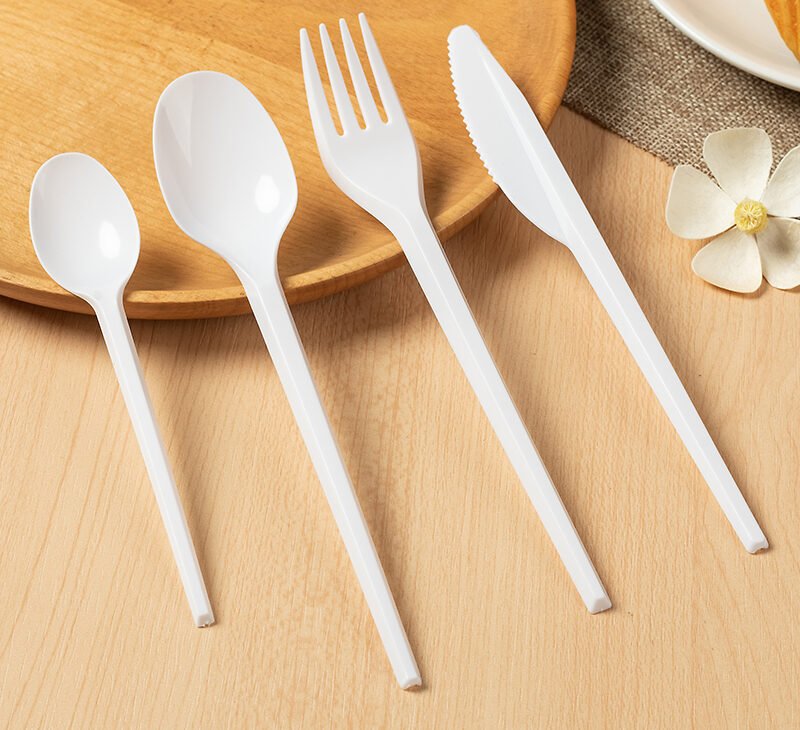
Variety Model (The Right Tool for the Job)You wouldn’t eat steak with a teaspoon. A professional set includes:
- Dinner Forks (18cm+): For main courses.
- Dessert Spoons (14-15cm): For yogurt and cake.
- Knives (Serrated vs. Plain): Serrated cuts through steak; plain spreads butter.
- The Spork: The quirky hybrid for camping and kids’ lunches.
Length & Weight (The Feel Test)
Close your eyes and hold a fork. Does it feel like a toy or a tool?
- Lightweight (2-3 grams): Cheap, flimsy, good for short-term use.
- Standard (4-5 grams): The industry goldilocks zone. Sturdy enough for fried rice.
- Heavyweight (6+ grams): Luxury disposables. They mimic metal.
Ask yourself: Have you ever snapped a fork while eating? That means your supplier skimped on the weight.
Custom Color (The Branding Hack)
White and black are boring. Today, custom color is king.
- Black cutlery looks sophisticated (hides coffee stains).
- Pastel PLA signals “eco-friendly.”
- Brand colors (Pantone matching) turn a fork into a marketing billboard.
Question for restaurateurs: If a customer sees a bright red fork, do they think “spicy food” or “cheap plastic”? Let us know in the comments.
Final Advice: Don’t buy cutlery based on price alone.
- For hot soup: Buy PP.
- For cold salad: Buy PS to save money.
- For the planet: Buy PLA… but only if you have access to industrial composting.